
Last night, the Seattle Seahawks defeated the New England Patriots, and the NFL season came to a close. Millions were also watching a stadium perform under immense pressure. The game was played at Levi’s Stadium, near San Francisco, and its role went far beyond hosting. The building itself became part of the spectacle, quietly proving how far NFL stadiums have evolved.
For architecture and engineering firms, this moment is worth studying. Stadiums sit at the intersection of scale, technology, culture, and emotion. Few building types are asked to perform so visibly, so reliably, and for such a global audience.
What the Super Bowl Demands From Modern Stadiums
The Super Bowl is no longer entrusted to venues based solely on prestige or regional rotation. In today’s NFL, hosting the biggest game of the year requires a stadium that does more than accommodate an event. It must elevate it. Venues are evaluated on infrastructure capacity, event logistics, connectivity, and their ability to integrate technology, fan experience, and flexibility into a multi-day global showcase.
These expectations have quietly reshaped what it means to be Super Bowl-ready. Stadiums are now judged as complex, high-performance environments rather than large-scale containers for spectators. At this level, sports architecture is measured not just by scale, but by how well a venue performs under sustained global pressure.
How Levi’s Stadium Reflects That Shift
In that context, Levi’s Stadium stands out not simply for meeting requirements, but for embodying a clear architectural vision. Designed by HNTB as a prototype for next-generation stadiums, it integrated technology, sustainability, and experiential design from the outset. Its openness, transparency, and interactive spaces reflect Silicon Valley’s innovation-driven identity while supporting the operational demands of events at Super Bowl scale.
What separates the stadium from a purely logistical venue is its adaptability. Open concourses, panoramic sightlines, sustainability strategies, and continuous technology upgrades were embedded as architectural decisions rather than added enhancements. Together, they allow the stadium to scale under pressure while still delivering a connected, comfortable, and emotionally engaging fan experience. That level of intentional design is exactly what makes the Super Bowl such a revealing real-world test of contemporary sports architecture.
What the Super Bowl Teaches Us About the Future of Sports Architecture Design
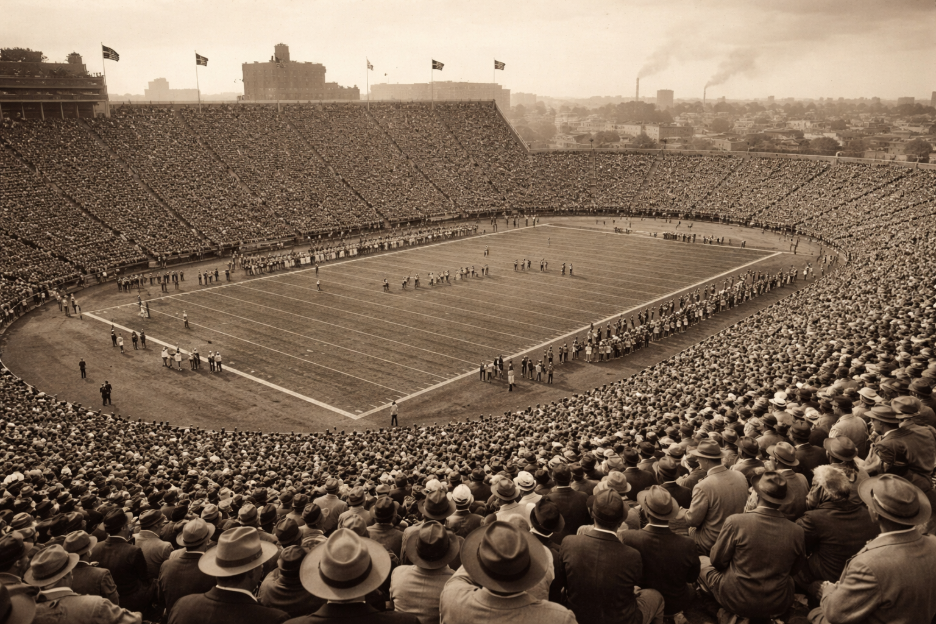
From Concrete Bowls to Cultural Icons
Early NFL stadiums were straightforward. Think large concrete bowls, tiered seating, limited amenities, and a singular focus. Get people in, seat them, and let the game happen. Function came first, experience second.
But as the league grew into a global entertainment powerhouse, expectations changed. Fans began demanding more comfort, better sightlines, protection from the elements, and spaces to gather, not just watch.
This shift marked the real beginning of modern NFL Stadium Evolution. Stadiums started becoming civic landmarks rather than isolated sports facilities. They reflected city identity, local culture, and long-term ambition.
Designing for the Human, Not Just the Crowd
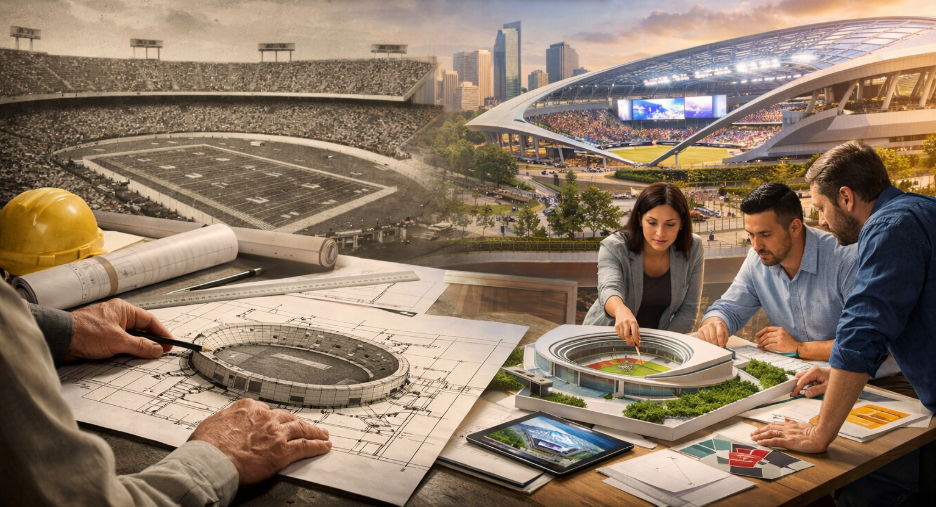
One of the biggest lessons in NFL Stadium Evolution is the shift from capacity to experience.
Modern stadiums now think deeply about how a fan feels walking from the parking area, how intuitive the concourse layout is, how close spectators feel to the action, and how sound travels during a game-winning play.
This people-first mindset is what sets today’s sports architecture apart. The building is no longer neutral. It actively participates in the emotional rhythm of the event.
For architects and engineers, that means designing for psychology as much as physics.
Technology as an Invisible Partner
Technology used to be something added after construction. Screens were mounted. Speakers were installed. Connectivity was often an afterthought.
Now, technology goes along with structure from day one.
The latest phase of NFL Stadium Evolution focuses on making stadiums work like smart environments. Modern venues are built to support tens of thousands of fans online at once, deliver lighting that looks just as good on television as it does in the stands, reconfigure spaces for games, concerts, and events, and monitor crowds, energy use, and safety in real time.
The best sports architecture hides this complexity. Fans do not see systems. They simply feel that everything works.
Sustainability Moves to Center Field
Modern NFL stadiums are no longer energy-hungry structures that wake up only on game day. Cities, leagues, and fans now expect responsibility.
That is why sustainability has become a defining chapter in NFL Stadium Evolution. This includes rainwater collection and reuse, efficient cooling and ventilation strategies, daylight-optimized seating bowls, and durable materials designed for decades of use.
For engineering teams especially, this is where innovation quietly shines. Great sports architecture now balances spectacle with stewardship.
Stadiums as Year-Round Infrastructure
Another major shift is how stadiums are used when there is no game. Older designs often left massive structures dormant for most of the year.
New stadiums are different. They function as concert venues, community gathering spaces, retail and dining hubs, and civic symbols.
This transformation has redefined NFL Stadium Evolution into something much broader than football. Stadiums are now mixed-use ecosystems that are deeply tied to urban life.
For architecture firms, this expands both creative opportunity and responsibility. Sports architecture must serve the city, not just the sport.
Sports Architecture: Lessons Architecture and Engineering Firms Can Take Away
Even firms that never design stadiums can learn from them.
NFL stadiums are masterclasses in crowd movement at scale, durability under intense use, clarity of wayfinding, and emotional storytelling through space.
The principles driving NFL Stadium Evolution often translate well into transport hubs, cultural venues, campuses, and large commercial developments. The discipline of sports architecture pushes design teams to think holistically, and that thinking elevates any project.
Looking Ahead: The Next Era of NFL Stadiums
If the 2026 Super Bowl showed us anything, it is that stadiums are still evolving. The next frontier likely includes even more adaptable seating and layouts, deeper integration with digital fan experiences, greater resilience to climate conditions, and stronger ties between stadiums and surrounding neighborhoods.
The future of sports architecture is not about bigger buildings. It is about smarter ones, spaces that respond, adapt, and connect.
Final Whistle

Ready to build what lasts beyond game day?
The same thinking that drives great stadiums drives great teams. Intentional design, seamless coordination, and people who perform under pressure. That is where BizForce comes in.
We help architecture and engineering firms scale smarter by providing highly skilled remote professionals who integrate into your workflows, support your deadlines, and grow with your projects. No noise. No disruption. Just dependable talent aligned with how modern firms actually work.
If your next chapter calls for stronger capacity, sharper execution, and a team built for the long game, partner with BizForce.
Let us help you design the moments that matter, long after the final whistle. Contact us here.